

Walking into a clinic for your first sexually transmitted infection (STI) screen can feel like a strange mix of adulthood milestone and pure, unadulterated nerves. We talk about sex constantly—in music, movies, and group chats—but the medical aftermath of having a body and sharing it with someone else is often left shrouded in mystery. If your heart is racing a bit just thinking about it, take a breath. That anxiety is completely normal, but the reality of the clinic is incredibly mundane.
Getting tested is a standard, routine piece of healthcare. It is as ordinary as getting your teeth cleaned, and the providers who do it see dozens of people just like you every single day. Let’s strip away the guesswork and walk through exactly what happens, from the moment you make the call to the second you get your results.
Booking the Appointment: What to Say and How to Say It
The hardest part of the entire process is often just getting the appointment on your calendar. It is easy to procrastinate when you don't know what words to use, or if you fear judgment from the person answering the phone.
First, know that clinic receptionists hear these requests all day long. They are not judging you; they are typing into a scheduling software and trying to figure out whether to book you for a 15-minute slot or a 30-minute slot. You do not need to give them your entire sexual history over the phone.
Here are a few exact scripts you can use depending on your situation:
- If you just want a routine check-up: "Hi, I'd like to schedule a routine, comprehensive STI screening. I don't have any symptoms; I just want to do a regular check."
- If you have a specific concern or symptom: "Hi, I need to book an appointment for an STI screening. I am experiencing some unusual symptoms [like burning or a rash] and want to get it checked out."
- If a partner told you they tested positive: "Hi, I need to come in for testing because a recent sexual partner tested positive for an infection, and I need to be screened and potentially treated."
When you call, the receptionist might ask when your last sexual encounter was. This isn’t to be nosy. Some infections take a few weeks to show up on a test, so they want to ensure you are booking at a time when the results will actually be accurate.
The Testing Toolkit: Urine, Blood, and Swabs
Once you are in the exam room, your provider will determine which testing methods are best for you. There is no single master test that detects everything through a single drop of sweat. Instead, clinics use a combination of three main methods.
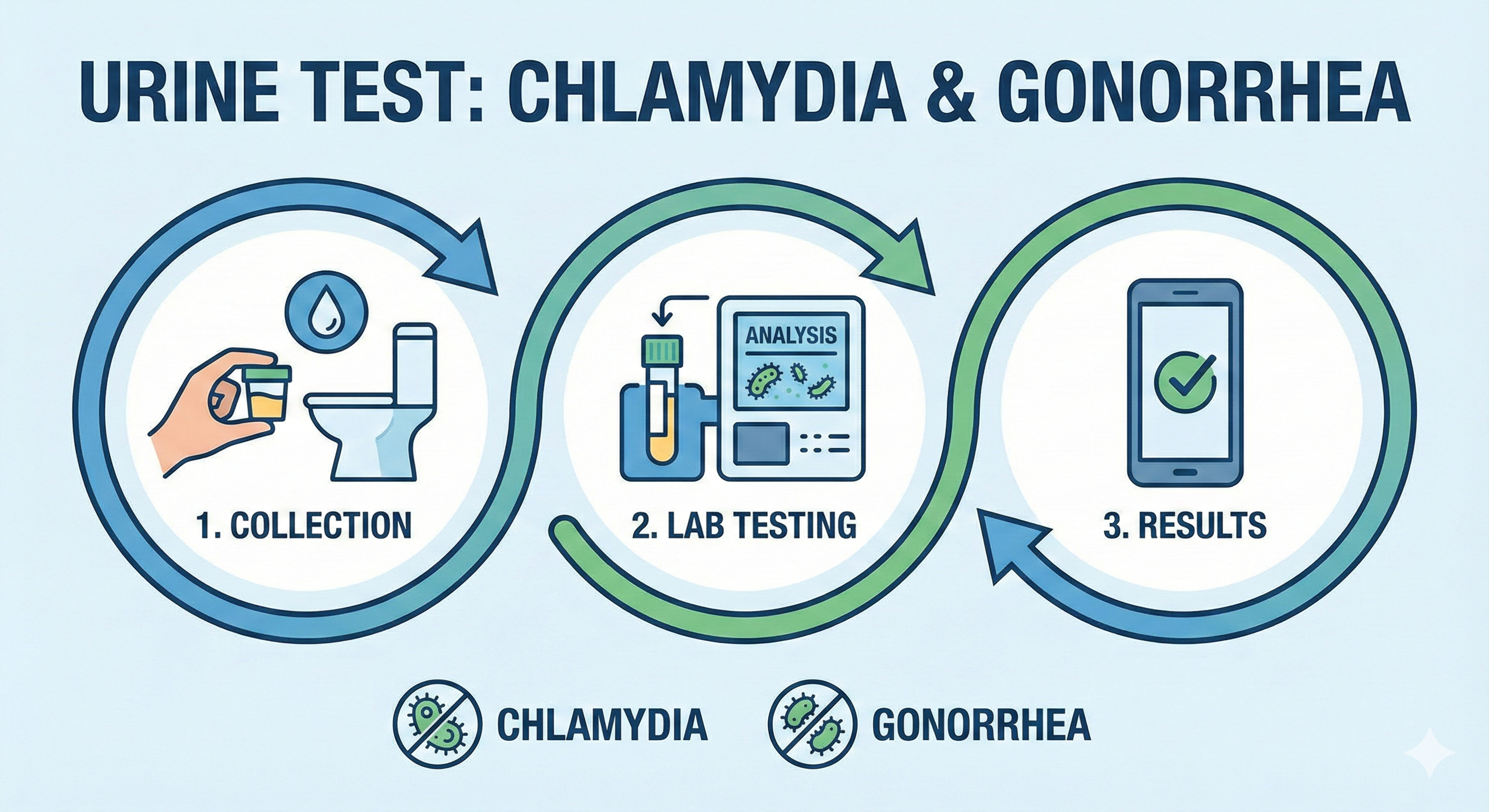
1. Urine Tests
This is usually the easiest part of the visit. You will be handed a plastic cup and directed to a restroom. However, there is a catch: do not pee right before your appointment. For an STI urine test to be accurate, you generally need to have held your urine for at least one to two hours.
You also do not need to fill the cup to the brim. The lab usually only needs a very small amount—often just the "first catch" or the first part of your stream, which carries the highest concentration of potential bacteria.
2. Blood Draws
Blood tests look for antibodies or the genetic material of viral infections rather than bacteria. A phlebotomist or nurse will tie a rubber band around your arm, find a vein, and draw a vial or two of blood. It takes less than a minute. If you hate needles, look away, breathe out slowly while the needle goes in, and let the person drawing your blood know ahead of time that you are nervous. They are experts at distracting you.
3. Swabs
Swabs are used to collect fluid and cells from specific anatomical sites. A swab looks like a long Q-tip. Depending on the types of sex you have, a provider might swab your urethra, cervix, vagina, throat, or rectum.
- Vaginal/Cervical Swabs: These can often be self-collected in the privacy of the bathroom if you prefer, or your doctor can do it during a pelvic exam.
- Throat and Rectal Swabs: If you engage in oral or anal sex, these are vital. Bacteria like chlamydia and gonorrhea can live in the throat or rectum without causing a single symptom, and a urine test will completely miss them. Don't be shy about asking for these; it’s just thorough medicine.
The Standard Panel vs. What You Actually Have to Request
One of the biggest misconceptions about sexual healthcare is that a "full panel" covers everything. If you walk into a clinic and say, "Test me for everything," you might assume you are being screened for every single STI on the planet. In reality, medical protocols dictate what is included in a standard screen based on cost, prevalence, and testing limitations.
Here is what a standard, routine panel typically includes:
- Chlamydia (Urine or swab)
- Gonorrhea (Urine or swab)
- HIV (Blood draw or rapid finger prick)
- Syphilis (Blood draw)
Now, let’s look at what is usually not included in that standard package, and why you might need to explicitly ask for them.
| Infection | Included in Standard Panel? | How It's Actually Tested / Why It's Left Off |
| Trichomoniasis | Rarely | Often only tested if you have symptoms (like unusual discharge), though it is incredibly common. |
| Hepatitis B & C | Sometimes | Included based on your specific risk factors, lifestyle, or if you have never been vaccinated for Hep B. |
| Herpes Simplex (HSV) | No | Blood tests for herpes can be unreliable and often show false positives. Centers for Disease Control and Prevention [External Authority Source: CDC STI Screening Guidelines] recommends against testing people without symptoms because the psychological distress of a positive result often outweighs the clinical benefit of knowing, especially since it doesn't change treatment if you don't have outbreaks. |
| Human Papillomavirus (HPV) | No | There is no approved HPV test for cisgender men. For individuals with a cervix, HPV testing is done as part of a routine Pap smear starting at age 21 or 25, not as a standalone STI screen. |
The Takeaway: Always ask your provider for a literal list of what they are testing you for. If you want to be checked for a specific infection because of a partner's history or a symptom you noticed, name that infection explicitly during your consult.
Managing the "Waiting Room" Anxiety
The time between leaving the clinic and getting your results is notoriously stressful. Every itch, tingle, or stray thought can suddenly feel like a symptom. Your brain loves to spin worst-case scenarios when it lacks information.
First, give yourself some grace. Acknowledging that the wait sucks is better than trying to force yourself to be perfectly calm.
Second, clarify the timeline before you walk out the clinic door. Ask the nurse: "How will I get my results, and when should I expect them?" Some clinics operate on a "no news is good news" policy, meaning they will only call you if something comes back positive. If you know that ahead of time, you won’t spend five days staring at your silent phone in a panic. Other clinics upload everything to an online patient portal within 3 to 7 business days.
If a test does come back positive, remember this: an STI is a medical condition, not a character flaw. Most common STIs, like chlamydia and gonorrhea, are cured with a simple round of antibiotics. Viral infections like HIV and herpes are highly manageable with modern medications, allowing people to live long, healthy lives and have safe, fulfilling sex lives. A positive test is simply information that allows you to take care of your body.
Privacy, Insurance, and Your Rights as a Young Adult
If you are a young adult, college student, or still on your parents' health insurance, privacy is likely your number one concern. You want to take care of your health, but you might not want to have an awkward conversation with your family about your sex life if they see an insurance statement.
Understanding HIPAA
In the United States, the Health Insurance Portability and Accountability Act (HIPAA) protects your medical privacy once you turn 18. This means a clinic cannot call your parents, email your roommates, or tell anyone else about your medical visits without your explicit, written permission. You are the sole owner of your medical records.
The Insurance Trap: Explanation of Benefits (EOB)
While the clinic won't tell your parents, your insurance company might accidentally do so through an Explanation of Benefits (EOB). An EOB is a statement sent to the policyholder (usually a parent, if you are on their plan) detailing what medical services were billed to the insurance. It might list the name of the clinic or codes for lab tests.
If you need absolute confidentiality from the person who owns your insurance policy, you have a few options:
- Call your insurance company: Request that all EOBs related to your care be sent electronically to your personal email or a secure online account rather than printed and mailed to the primary household.
- Pay out of pocket: Many clinics offer discounted cash prices for students or low-income individuals if you choose not to use insurance at all.
- Go to a dedicated sexual health clinic: Title X clinics and community health centers often use sliding scale fees based only on your personal income, not your parents' income.
How to Find Low-Cost and Free Clinics
Total cost should never be a barrier to knowing your status. If you don't have insurance or cannot use it for privacy reasons, you are not out of options.
Title X Family Planning Clinics
The federal Title X program funds clinics across the country to provide affordable reproductive healthcare. These clinics offer birth control, STI testing, and exams. The cost is calculated on a "sliding scale" based entirely on what you earn. If you are a student with a part-time job or no income, your services are frequently 100% free.
Local Health Departments
Your city or county public health department almost certainly runs an STI clinic. Because their primary goal is to stop the spread of infections in the community, these clinics are designed to be fast, highly accessible, and either free or incredibly cheap.
Planned Parenthood
Planned Parenthood is a major provider of sexual healthcare. They accept most insurances, but they also offer sliding-scale fees for those paying out of pocket. They are deeply accustomed to working with young adults who need confidential, compassionate care.
To find a testing site near you, you can use secure, anonymous lookup tools like the [Internal Link Placeholder: How to find local sexual health clinics] directories or the CDC's testing locator database.
Moving Forward at Your Own Pace
Taking charge of your sexual health can feel intimidating the first time around, but navigating the clinic gets easier every single time you do it. By scheduling a test, you are choosing to respect your body, protect your partners, and demystify a completely normal aspect of human biology. Knowledge is always better than wondering, and you have all the tools you need to walk into that clinic with confidence.
Have you booked your first test yet, or do you have a tip that helped you get through the waiting room jitters? Leave an anonymous comment below to share your story, or subscribe to our weekly newsletter for straightforward, barrier-free health advice delivered straight to your inbox.
